How to Clean Up Your Bookkeeping Before Year End

Year end has a way of sneaking up right when your inbox, customer work, and holiday plans all get louder. Then suddenly you’re staring at uncategorized transactions, missing receipts, and a bank balance that doesn’t quite match your books.
The good news? You don’t have to fix everything in one day.
A year-end bookkeeping cleanup works best when you break it into small, clear passes. First, you make sure all the money in and out is captured. Then you match your records to real statements. After that, you clean up the weird stuff, review taxes, and package everything for your tax preparer or future self.
This post is informational and shouldn’t replace advice from a qualified tax or accounting professional. But if your books feel messy right now, this will give you a practical place to start.
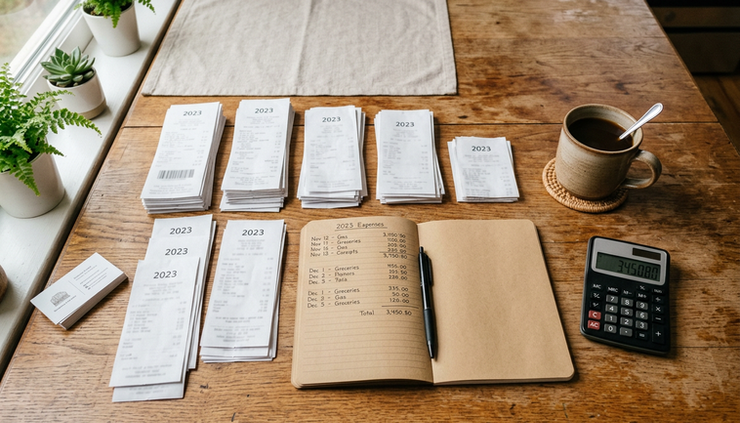
Start with a simple bookkeeping triage
Before you open every report and start clicking around, take a quick inventory of what’s actually messy.
This saves time because not every bookkeeping file has the same problem. Some businesses are missing receipts. Some have months of unreconciled bank accounts. Others have income recorded twice or loan payments sitting in the wrong category.
Give yourself 30 to 60 minutes and make a short cleanup list.
Look for:
Bank and credit card accounts that haven’t been reconciled
Transactions sitting in uncategorized income or expense buckets
Duplicate income or transfer entries
Negative balances that don’t make sense
Old unpaid invoices that will probably never be collected
Vendor bills that were paid but still show as open
Personal expenses mixed into business accounts
Missing payroll, sales tax, or loan records
Don’t fix everything yet. Just note what you find.
Think of this like walking through a messy room before cleaning it. You’re figuring out whether you need trash bags, laundry baskets, or a toolbox. Same idea here.
Gather the records you’ll need
A cleanup gets frustrating fast when you keep stopping to search for documents. So before you get too deep, pull together the statements and records that support your books.
At minimum, gather:
Bank statements for all business checking and savings accounts
Credit card statements used for business purchases
Loan statements
Merchant processor or payment deposit reports
Payroll summaries
Sales tax filings and payment confirmations
Receipts for larger purchases
Customer invoice records
Vendor bills and payment confirmations
Prior-year tax return, if you have it handy
If you use a separate account for business, this part is much easier. If personal and business activity are mixed, don’t panic. You’ll just need to be more careful when you tag owner contributions, owner draws, and true business expenses.
A quick tip: create one folder for the year and use subfolders by month or by account. Even if you still have cleanup work to do, having the backup in one place will make tax season much less painful.
Reconcile every bank and credit card account
Reconciliation is the part of bookkeeping cleanup that tells you whether your books match reality.
That means your accounting records should match the ending balance on your bank or credit card statement for the same date. If they don’t, something is missing, duplicated, dated wrong, or categorized in a way that affects the balance.
Start with January and work forward month by month. If you’re already reconciled through part of the year, begin with the first unreconciled month.
Here’s the basic flow:
Pick one account.
Open the statement for that month.
Match deposits, withdrawals, checks, fees, interest, and payments.
Investigate anything that appears in one place but not the other.
Finish the month before moving to the next one.
Don’t skip around too much. A small mistake in March can create confusion in September.
If you find duplicate transactions, review them carefully before deleting anything. Sometimes what looks like a duplicate is actually a transfer, a split deposit, or a card payment recorded two different ways.
Reconciliation is the backbone of year-end cleanup. If the bank and credit card accounts aren’t reconciled, the rest of the reports are harder to trust.
Clean up income so sales are reported correctly
Income mistakes can throw off your taxes, profit numbers, and planning. So once the cash accounts are reconciled, review how your revenue was recorded.
Pay close attention to deposits. One deposit in the bank can include several customer payments, fees withheld by a payment processor, refunds, or sales tax collected. If you record the full deposit as income without splitting it correctly, your sales may be overstated or your fees may be missing.
Common income cleanup issues include:
Customer payments recorded as sales when they should close an invoice
Transfers from savings recorded as income
Loan proceeds recorded as sales
Owner contributions recorded as revenue
Refunds posted to the wrong account
Sales tax collected counted as income
Pull a profit and loss report for the year and scan the income section. Does it make sense based on what you know happened? If one month looks unusually high or low, click into the detail and see why.
You’re not looking for perfection in five minutes. You’re looking for anything obviously wrong.
Review expenses without overthinking every penny
Expense cleanup is where people tend to get stuck. They open a transaction from February, can’t remember what it was, and lose momentum.
Instead, work in passes.
First, deal with uncategorized transactions. These are usually the easiest wins because they’re already waiting for attention. Use bank descriptions, receipts, vendor names, and memory where needed.
Next, review major expense categories. Look for things that don’t belong.
For example, meals should not include software subscriptions. Supplies should not include loan payments. Insurance should not include contractor payments. If one category looks strangely large, drill down.
Then look for personal expenses. If a personal charge ran through a business account, don’t hide it in a random expense category. Mark it properly as an owner draw, shareholder distribution, or another equity-related category based on your business structure and your accountant’s guidance.
For larger purchases, ask whether the item should be treated as an asset instead of a regular expense. Equipment, furniture, vehicles, and other long-term items may need special handling.
If you’re unsure, flag it. Don’t spend an hour guessing.
Make sure transfers and loan payments aren’t inflating your numbers
Transfers are one of the most common bookkeeping messes.
Moving money from checking to savings is not income. Paying a business credit card from checking is not a new expense if the card charges are already recorded. Receiving loan funds is not sales revenue. Paying down principal on a loan is usually not the same as paying interest.
This matters because misclassified transfers can make your business look more profitable, more expensive, or more active than it really is.
Review these areas carefully:
Payments between business bank accounts
Credit card payments
Loan deposits
Loan payments
Owner contributions
Owner withdrawals
Reimbursements
A good cleanup goal is simple: money should only count as income or expense when it truly belongs there.

Check invoices, bills, and aging reports
If your business sends invoices or tracks bills, year end is the time to clean up what’s still marked as unpaid.
Start with accounts receivable, which is money customers owe you. Run an invoice aging report. Look for:
Invoices that were paid but still show open
Very old invoices that may need follow-up
Duplicate invoices
Customer credits that haven’t been applied
Bad debts you need to discuss with your tax professional
Then review accounts payable, which is money you owe vendors. Look for:
Bills that were paid but still show open
Duplicate bills
Vendor credits
Old balances that don’t look real
Expenses entered in the wrong year
These reports matter because they affect your year-end numbers, especially if you use accrual accounting. Even if you use cash basis reporting for taxes, clean open invoices and bills help you understand what’s actually happening in the business.
Review payroll, contractors, and tax-related forms
Payroll and contractor records deserve extra attention before year end because January filing deadlines can come fast.
If you have employees, compare your payroll summaries to your books. Wages, payroll taxes, benefits, reimbursements, and employer tax payments should be recorded in the right categories.
If you pay contractors, review who may need a year-end tax form. In the U.S., many businesses use Form 1099-NEC for certain nonemployee compensation. The rules can vary based on amount paid, business type, payment method, and other factors, so check with a tax professional if you’re unsure.
Before December ends, it’s smart to collect missing contractor information. That usually means getting a completed taxpayer information form before you’re under deadline pressure.
Also review:
Sales tax collected and paid
Estimated tax payments
Payroll tax payments
State or local tax accounts
Any notices received during the year
Don’t wait until tax forms are due to find out a vendor address or tax ID is missing.
Look at your balance sheet for anything strange
Many people focus only on the profit and loss report, but your balance sheet can reveal cleanup issues that the income statement won’t show.
Run a balance sheet as of December 31 and scan it slowly.
Look for things like:
Negative bank balances that don’t match reality
Credit cards showing positive balances without a reason
Loans with balances that don’t match lender statements
Old assets that were sold, scrapped, or fully replaced
Payroll liabilities that should have been paid
Sales tax payable that doesn’t match filings
Suspense or clearing accounts with leftover balances
A balance sheet can feel less familiar than a profit and loss report, but don’t ignore it. It’s often where bookkeeping errors go to hide.
If you see an account that makes no sense, open the detail and review the transactions. If it still doesn’t make sense, add it to your accountant question list.
Create a year-end question list for your tax preparer
You don’t need to know everything before you ask for help. In fact, a clean question list can save money and time because your tax preparer won’t have to untangle vague issues.
As you clean up, keep a running list of questions such as:
How should this equipment purchase be handled?
Should this old invoice be written off?
Is this worker classified correctly?
How should these owner payments be recorded?
Does this loan statement match the books?
Are these meals, travel, or vehicle expenses documented well enough?
Should any year-end adjustments be made?
Include transaction dates, amounts, and a short note. That’s much better than sending a message that says, “Something looks weird with expenses.”
If your books are very behind, ask for help sooner rather than later. Bookkeepers and tax professionals get busy as year end approaches and into tax season.
Build a simple cleanup schedule
Trying to clean a full year of books in one marathon session is a recipe for mistakes. A simple schedule works better.
Here’s a realistic plan if you have a few weeks:
Week | Focus |
Week 1 | Gather statements, receipts, payroll records, and tax documents |
Week 2 | Reconcile bank and credit card accounts |
Week 3 | Clean up income, expenses, transfers, and loans |
Week 4 | Review invoices, bills, balance sheet, payroll, contractors, and tax questions |
If you’re short on time, prioritize in this order:
Reconcile bank and credit card accounts.
Fix uncategorized income and expenses.
Review payroll, sales tax, and contractor records.
Check open invoices and unpaid bills.
Scan the balance sheet for obvious problems.
That order gives you the best chance of having usable books, even if you can’t make everything perfect before December 31.
Set yourself up so next year is easier
Once you’ve done the cleanup, give future you a gift. Put a few simple habits in place now.
Try this:
Reconcile monthly, not once a year.
Save receipts as you go, especially for larger purchases.
Keep business and personal spending separate.
Review uncategorized transactions every week or two.
Use consistent categories.
Ask questions when something is unclear.
Keep contractor records updated before payments pile up.
You don’t need a complicated system. You need one you’ll actually use.
The goal is to make bookkeeping less dramatic. Clean books help you see profit, plan cash flow, prepare for taxes, and make better decisions without guessing.
FAQ
When should I start cleaning up my bookkeeping before year end?
Start as soon as you can, ideally in November or early December. That gives you time to find missing documents, ask questions, and fix errors before tax season pressure kicks in.
What if I haven’t reconciled my accounts all year?
Start with the oldest unreconciled month and work forward. Don’t jump straight to December. Earlier errors can affect later months, so going in order usually saves time.
Do I need every receipt to finish my books?
You should keep support for business expenses, especially larger or unusual purchases. If a small receipt is missing, use the bank or credit card record as a starting point and ask your tax professional what documentation is acceptable.
What’s the biggest year-end bookkeeping mistake?
One of the biggest mistakes is treating transfers, loans, or owner contributions as income. That can badly distort your profit and create tax confusion.
Should I clean up my books myself or hire help?
If the issues are simple, you may be able to handle the cleanup yourself. If accounts won’t reconcile, payroll is messy, loans are confusing, or prior years are involved, getting help can be worth it.
A clean year end starts with the next small step
You don’t have to turn messy books into perfect books overnight. Start by gathering your records. Then reconcile one account. Then clean up one category. Keep going in small passes.
By the time year end arrives, you’ll have cleaner numbers, fewer surprises, and a much better handle on what happened in your business this year.
That’s the real win: books you can trust, not just books you survived.


Comments